Blog Ecobraz Eigre
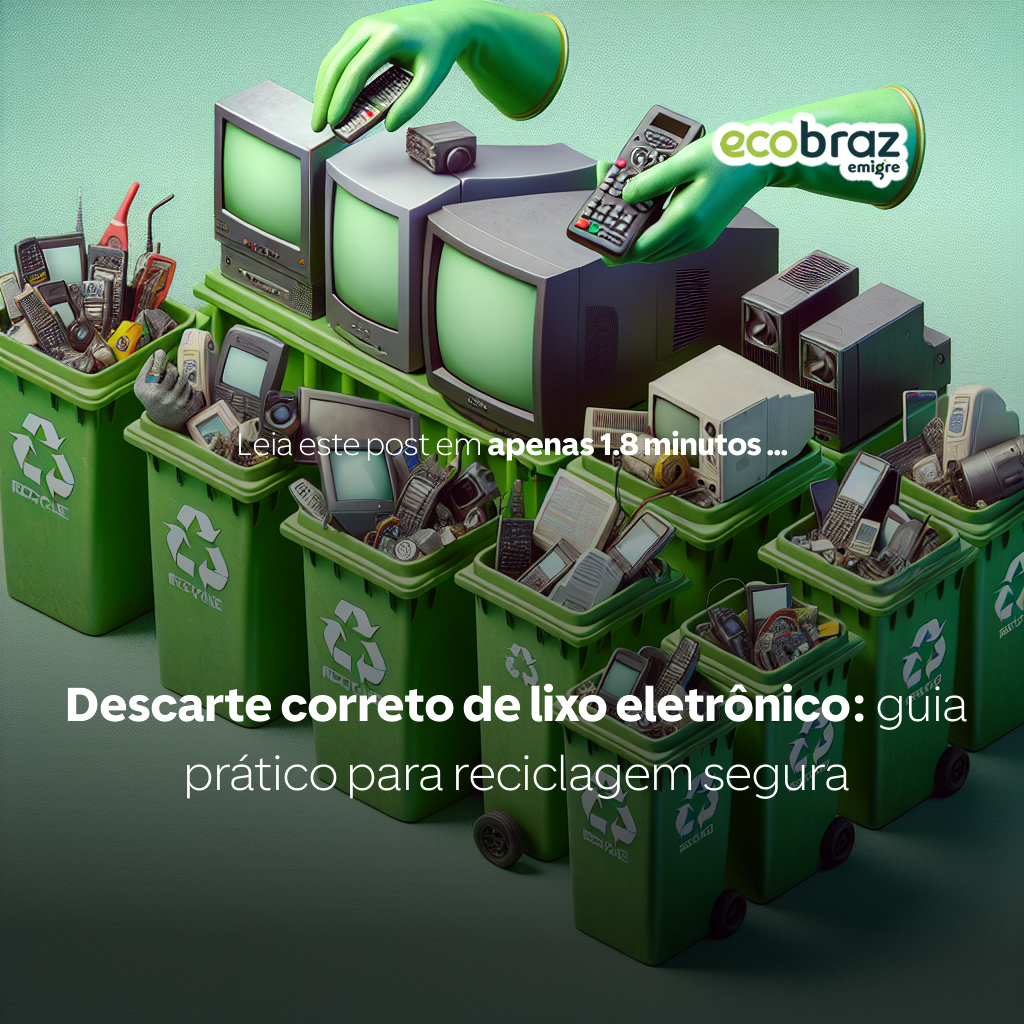
Proper disposal of electronic waste: a practical guide to safe recycling
What is electronic waste?
Electronic waste refers to all discarded electronic devices that are no longer useful to their users, such as cell phones, computers, televisions, batteries and other electronic devices. Because they contain dangerous substances such as heavy metals, improper disposal can cause serious damage to the environment and human health.
Why is proper disposal so important?
Inappropriate disposal of electronic waste can lead to contamination of the soil, water and air due to the release of toxic substances. In addition, many components of these devices can be recycled and reused, reducing the extraction of raw materials and the environmental impact.
Step by step to safe disposal
- Identify obsolete electronic equipment: Separate all devices that are no longer in use and need to be disposed of.
- Delete personal data: Before disposing of computers, cell phones and other storage devices, make sure to permanently delete all personal information.
- Search for specific collection points: Use designated collection points for electronic waste, which ensure that the equipment is properly disposed of.
- Never dispose of electronic materials in ordinary garbage cans, as this hinders the recycling process and poses an environmental risk.
- Understand the recycling processes: Recycling electronic waste involves modules such as dismantling, separating components and reusing metals, plastic and glass.
Environmental and social impacts of electronics recycling
By recycling electronic devices correctly, we reduce the extraction of raw materials, reduce the amount of waste in landfills and mitigate the health risks caused by toxic substances. In addition, recycling can create jobs and foster a more sustainable circular economy.
How to get informed and get involved
Be aware of sustainable disposal campaigns and actions in your city. Many municipalities and organizations provide collection points and educational information to guide the population.
Use reliable websites and apps to locate these points and find out which materials can be recycled. Educating and raising awareness is key to increasing the number of people involved.
Tips for extending the useful life of electronics
- Preventive maintenance of devices.
- Use covers, films and protective equipment.
- Update software to ensure better performance.
- Consider donating devices that still work and are no longer useful to you.
By adopting good practices in the use and disposal of electronics, we contribute to a healthier and less polluted planet.
ManifestTransparency & Security Manifesto
Evidence and transparency: Our ESG approach is built on traceable documentation, verifiable records and auditable operational criteria. We turn electronic waste management into operational evidence to support governance, traceability and the mitigation of environmental, documentary and corporate risks. Documentary security and compliance: Documented traceability helps reduce regulatory exposure, strengthens documentary defensibility and supports alignment with applicable environmental policies, corporate contracts and governance requirements, including national and international references relevant to supply chains. Operational costing of reverse logistics: Door-to-door collection and responsible processing of electronic waste involve relevant logistics, technical and documentary costs. For this reason, Ecobraz structures transparent operational costing models linked to reverse logistics execution, with no promise of financial return, investment or asset appreciation. Governance: Operational execution is guided by compliance, traceability and verifiable documentation criteria. The priority is to strengthen the client’s corporate evidence, reduce documentary gaps and support safer, more responsible and defensible disposal decisions.

Deixe um comentário
O seu endereço de e-mail não será publicado. Campos obrigatórios são marcados com *