Blog Ecobraz Eigre
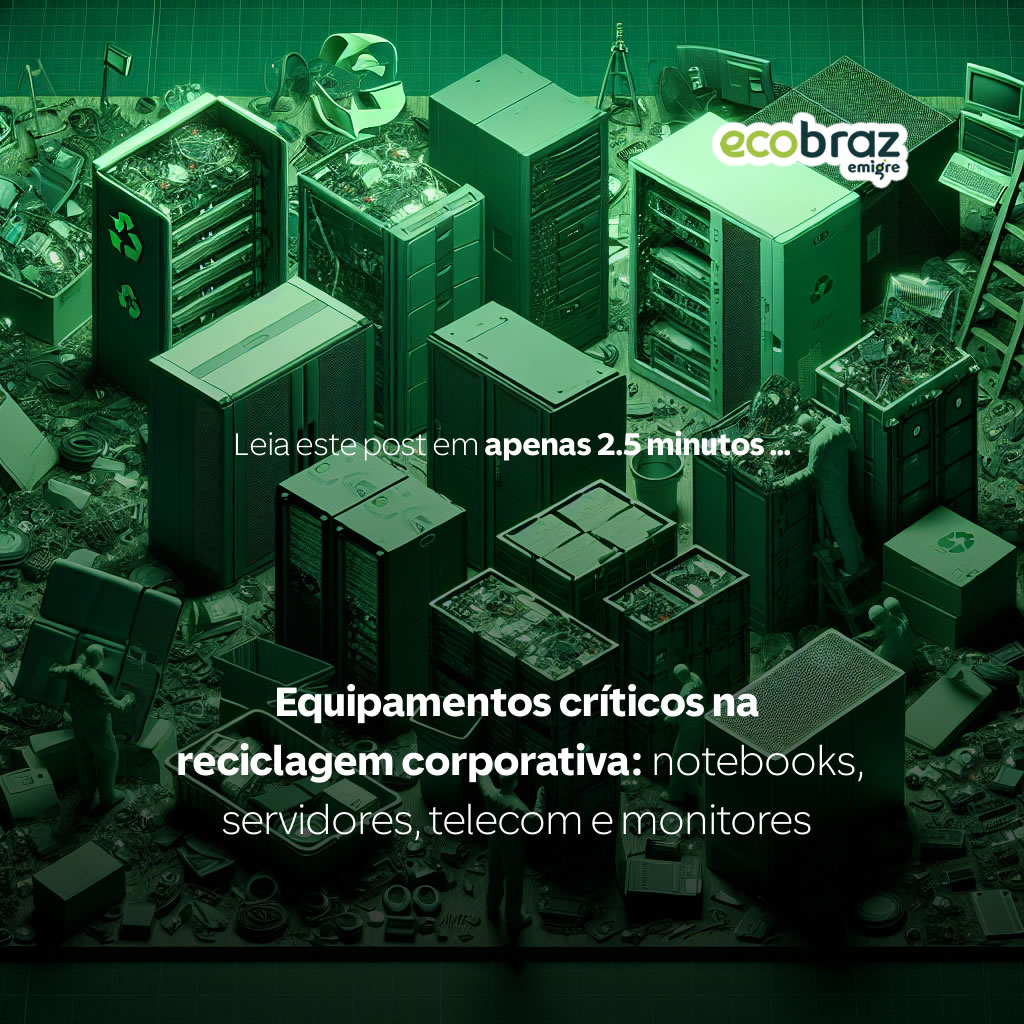
Critical Equipment in Corporate Recycling: Notebooks, Servers, Telecom, and Monitors
Importance of Critical Equipment in Corporate Recycling
Notebooks, servers, telecommunications equipment, and monitors are essential components in the corporate environment, as well as representing major challenges in the recycling process due to technological complexity and the presence of potentially harmful materials. The proper management of these assets at the end of their useful life is crucial to ensure environmental compliance and information security.
Legal Aspects and Applicable Regulation
The National Solid Waste Policy, established by Law No. 12,305/2010, sets out shared responsibility for the proper disposal of electronic waste, including notebooks, servers, telecom equipment, and monitors (art. 33). The National Solid Waste Management Information System (SINIR), governed by Decree No. 10,936/2022, also reinforces the importance of controlled management of these wastes to minimize environmental impacts (sinir.gov.br).
Disposal and Recycling of Notebooks and Servers
Notebooks and servers are units with high technological density, containing components with heavy metals such as lead and mercury, which require specialized treatment. For the safe disposal of these devices, it is recommended to use authorized services that promote dismantling, fragmentation, and material recovery, according to the guidelines of the electronic waste collection scheduling. These practices ensure the mitigation of environmental risks and the reuse of valuable raw materials.
Telecommunications Equipment in the Recycling Chain
Telecommunications equipment, including routers, switches, and other network devices, require special attention due to the presence of sensitive electronic components and the security of temporarily stored data. The proper recycling process must follow protocols that ensure the complete destruction of information, following practices recommended by the National Consumer Secretariat (SENACON) and market standards.
Monitors: Care and Procedures for Recycling
Monitors, especially LCD and LED types, contain elements such as mercury in older models and plastic components that require specific disposal and recycling processes. CETESB emphasizes the need for proper packaging and technical destination to prevent soil and water contamination (cetesb.sp.gov.br). Appropriate treatment includes dismantling, mechanical processing, and forwarding to specialized units.
Data Sanitization in Storage Devices
Hard drives (HDs) and other storage media require rigorous sanitization processes to ensure the complete elimination of confidential corporate data and compliance with the General Data Protection Law (LGPD - Law No. 13,709/2018). Certified procedures must be employed, such as those offered in the HD sanitization scheduling, which guarantee the logical and physical destruction of the data.
Benefits of Responsible Corporate Recycling
The proper management of critical electronic equipment contributes to reducing environmental impact and regulatory compliance, as well as avoiding risks associated with exposure to toxic materials and information leaks. The adoption of sustainable practices strengthens institutional reputation and helps meet legal obligations, according to the guidelines of the National Solid Waste Policy.
Conclusion
The proper recycling of notebooks, servers, telecom equipment, and monitors in the corporate environment requires a specialized technical approach, supported by specific legislation and sustainable good practices. Using authorized services for collection and sanitization ensures environmental and information security, aligning with legal requirements and responsible electronic waste management.

Deixe um comentário
O seu endereço de e-mail não será publicado. Campos obrigatórios são marcados com *