Blog Ecobraz Eigre
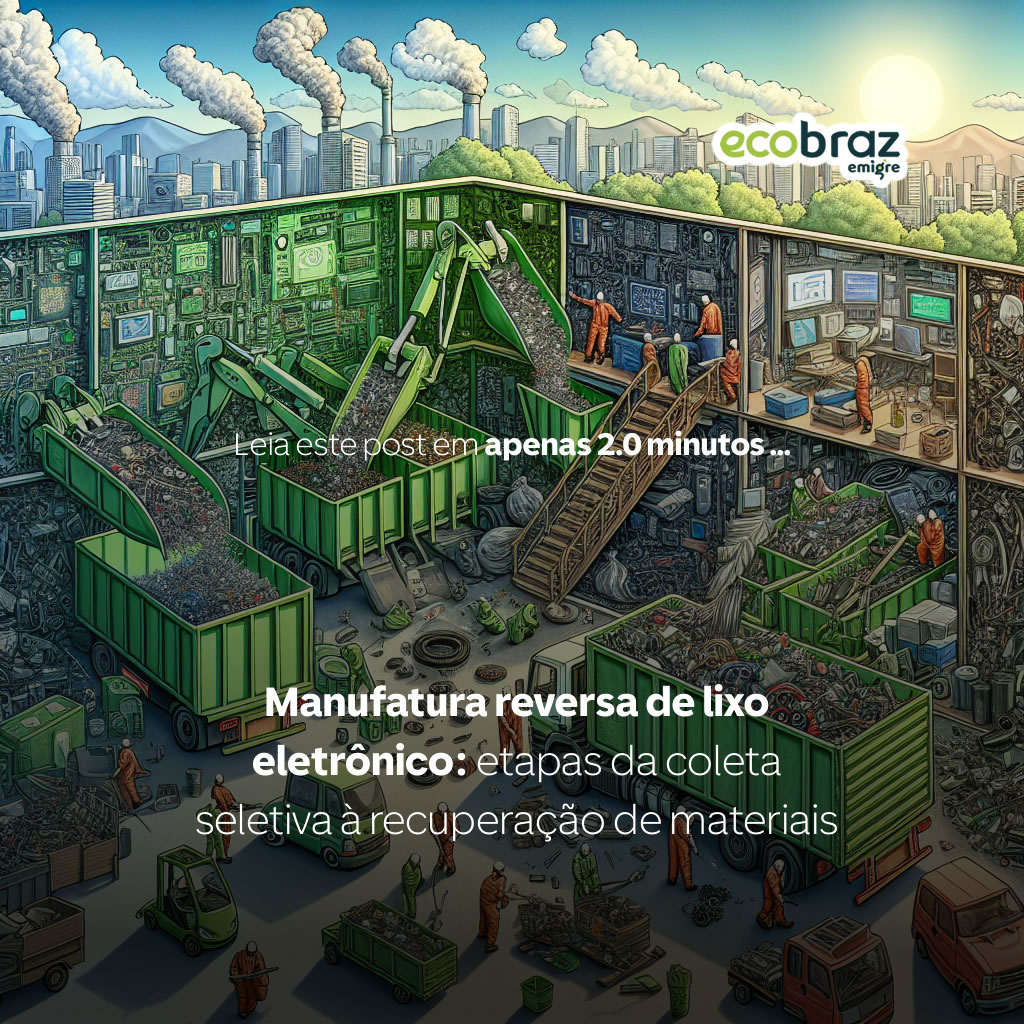
Reverse Manufacturing of Electronic Waste: Steps from Selective Collection to Material Recovery
Introduction to Reverse Manufacturing of Electronic Waste
Reverse manufacturing applied to electronic waste consists of structured processes for the disassembly, sorting, and recovery of valuable components and materials present in discarded equipment, promoting circular economy and mitigating environmental impacts.
Selective Collection of Electronic Waste
The selective collection of electronic waste is a fundamental step to ensure the proper handling of these materials. According to the provisions in the National Solid Waste Policy (Law No. 12,305/2010), segregation at the source allows circuits, boards, and other components to be appropriately directed to subsequent reuse or environmentally safe disposal processes. To perform specialized selective collection, scheduling is recommended and available at electronics scheduling.
Sorting and Disassembly of Components
Sorting consists of identifying and separating materials by type – plastics, ferrous and non-ferrous metals, glass, and sensitive electronic components. Careful disassembly aims to preserve the integrity of elements suitable for direct reuse or later recycling. Each step is carried out according to environmental and safety standards, preventing contamination by heavy metals, toxic components, and hazardous substances.
Material Recovery and Recycling Process
After disassembly and segregation, materials undergo physical and chemical processes to extract valuable elements such as copper, gold, silver, and aluminum. These processes are aligned with technical protocols recommended by environmental agencies, avoiding waste and maximizing recovery yields.
Sanitization and Safe Disposal of Digital Media
The disposal of devices such as hard drives (HDs) and other digital media requires strict sanitization procedures to protect data and mitigate information security risks, according to available technical guidelines. Safe disposal and sanitization of HDs—including melting, demagnetization, and physical destruction of data—must be conducted by qualified entities, with scheduling available at electronics scheduling.
Applicable Legislation and Regulation
The current legal framework for the management of electronic waste in Brazil is based on the Law No. 12,305/2010 - National Solid Waste Policy, complemented by the National Information System on Solid Waste Management (SINIR) and local environmental regulations. Also highlighted is the importance of compliance with the technical standards of the Technical Reference Methodology for electronic waste, aiming at proper traceability and documentation of the reverse cycle.
Conclusion
Reverse manufacturing of electronic waste, through processes of selective collection, efficient sorting, technical disassembly, and adequate material recovery, is an essential instrument to promote sustainability in the sector, encourage circular economy, and comply with current legal requirements for environmental protection and information security.

Deixe um comentário
O seu endereço de e-mail não será publicado. Campos obrigatórios são marcados com *