Blog Ecobraz Eigre
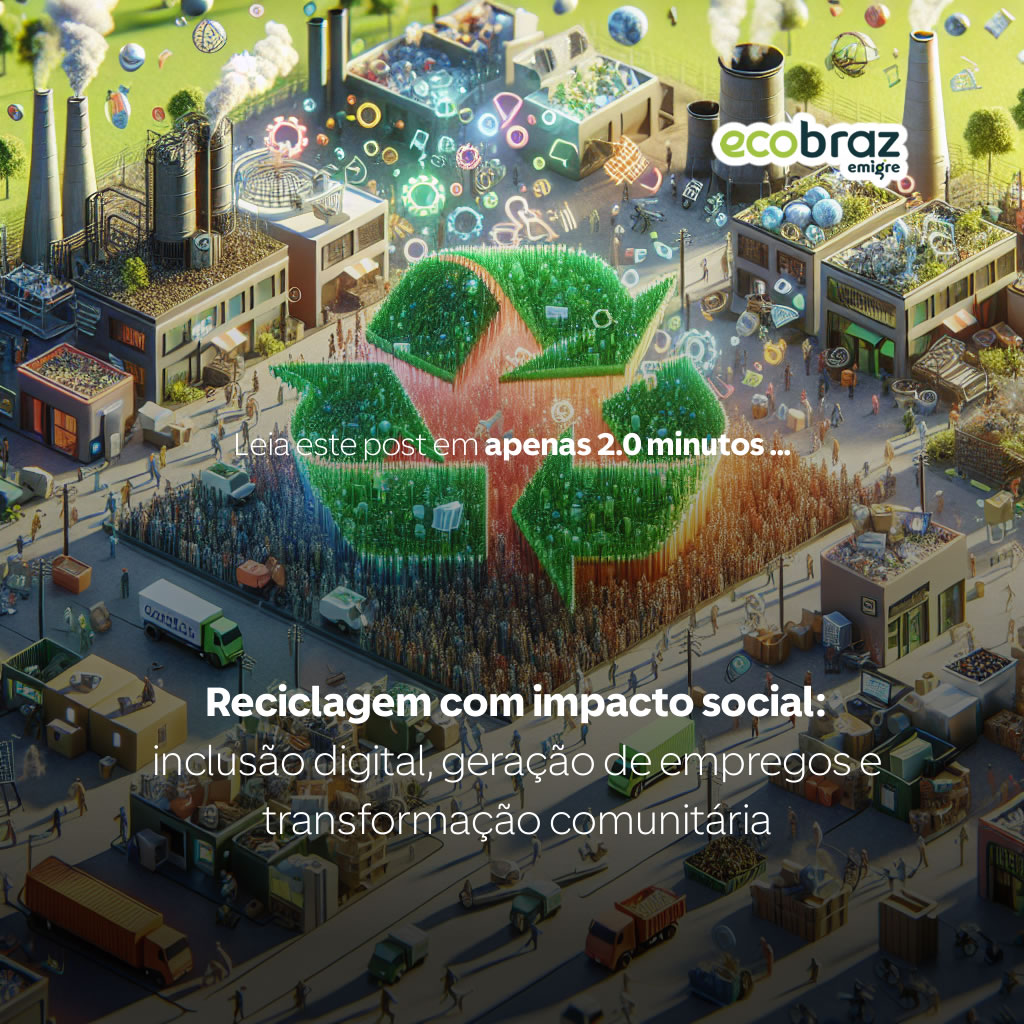
Recycling with Social Impact: Digital Inclusion, Job Creation, and Community Transformation
Introduction to Recycling with Social Impact
Recycling plays a crucial role not only in the environmental aspect but also in promoting digital inclusion, job creation, and community transformation. Brazilian legislation, especially the National Solid Waste Policy (Law 12.305/2010), reinforces the importance of proper waste management for sustainable development and social protection.
Digital Inclusion and Recycling
Digital inclusion is facilitated through the recycling and reuse of electronic equipment, allowing expanded access to technology in underprivileged communities. The reuse of electronic components promotes the democratization of access to information and communication, which directly impacts the quality of life and socioeconomic development.
Job Creation and Circular Economy
Recycling stimulates the local economy through the creation of direct and indirect jobs. The process includes the collection, sorting, dismantling, and proper disposal of electronic waste, developing technical skills and qualified labor within communities. This production chain contributes to the circular economy, reducing dependence on virgin raw materials and encouraging sustainable economic activities.
Community Transformation through Recycling
The social impact of recycling goes beyond the economic sphere, promoting community transformation. Active participation of communities in programs for collecting and reusing equipment fosters environmental awareness and social responsibility. Community engagement strengthens networks of solidarity and favors the implementation of public policies aligned with sustainable development.
Legal and Regulatory Aspects
The National Solid Waste Policy (Law 12.305/2010) establishes guidelines for integrated waste management, including shared responsibility among the productive, public, and citizen sectors. The National System of Information on Solid Waste Management (SINIR) provides updated data to support policy formulation and action monitoring.
Safe Disposal and Specialized Collection
Proper disposal of digital media, such as hard drives, requires sanitization processes that ensure information security, following best practices recommended by official bodies. For this procedure, it is recommended to use specialized services for hard drive sanitization. Additionally, specialized collection of electronic waste is essential to avoid negative environmental impacts. To schedule this collection, consult the information available at electronic waste collection.
Conclusion
Recycling with social impact represents an integrated strategy to promote environmental sustainability, digital inclusion, job creation, and community development. Alignment with current legislation and the use of appropriate technologies contribute to strengthening these actions, directly benefiting society and the environment.

Deixe um comentário
O seu endereço de e-mail não será publicado. Campos obrigatórios são marcados com *