Blog Ecobraz Eigre
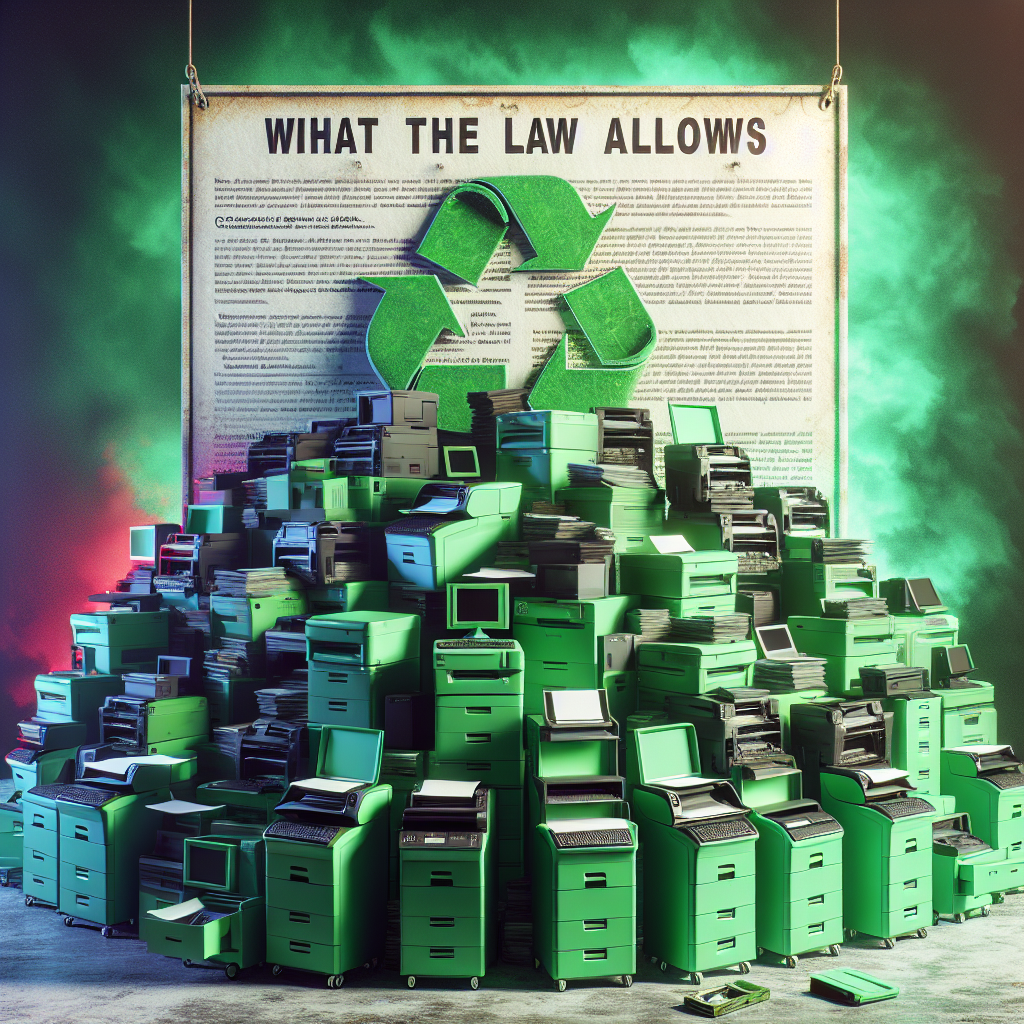
Recycling Printers: What the Law Allows
Legal Framework for Recycling Printing Equipment
The proper handling of electronic equipment, such as printers, is regulated by Brazilian environmental legislation, which establishes responsibilities for the correct disposal of these devices at the end of their life cycle. The main rule governing the issue is the National Solid Waste Policy (Law No. 12.305/2010), which defines guidelines for the management and recycling of electronic waste in order to minimize environmental impacts and promote the circular economy.
Responsibilities and Legal Obligations
According to article 33 of Law No. 12.305/2010, manufacturers, importers, distributors and retailers are obliged to structure and implement reverse logistics systems, i.e. mechanisms that make it possible to collect and return used equipment for reuse, recycling or environmentally appropriate disposal. The legislation does not allow irregular disposal in common landfills, avoiding risks to public health and environmental contamination.
Technical Requirements for Printer Recycling
Printers contain electronic components and potentially hazardous materials, requiring specialized treatment. Recycling must take place in licensed establishments, in accordance with the regulations of the CETESB and state environmental agencies, guaranteeing the safe segregation, dismantling and reuse of parts and materials.
Collection and Proper Final Disposal
For the proper disposal of printers and other electronics, it is recommended to participate in official electronic collection programs, which ensure transport and processing in accordance with current environmental standards. These programs make it possible to send them for recycling or safe disposal, minimizing adverse environmental effects. For scheduling and information on electronic equipment collection, see electronic waste collection.
Data and Stored Media Security
Before sending for recycling or disposal, it is essential to ensure the sanitization and destruction of media stored in equipment with hard disks or other forms of memory, in compliance with information security guidelines. Specialized services guarantee the definitive elimination of data, in accordance with practices recommended by the Safe Disposal of Electronic Media.
Penalties and Enforcement
Failure to comply with the regulations of the National Solid Waste Policy entails the sanctions provided for in articles 55 et seq. of Law No. 12.305/2010, as well as civil and administrative liability in accordance with the Consumer Protection Code and complementary environmental legislation. Enforcement is carried out by municipal, state and federal environmental agencies.
Conclusion
Brazilian legislation establishes clear parameters for printer recycling, imposing obligations on the production chain to ensure environmentally appropriate disposal and information security. Following the rules in force ensures not only legal compliance, but also environmental and data protection, contributing to sustainability in the handling of electronic equipment.
ManifestTransparency & Security Manifesto
Evidence and transparency: Our ESG approach is built on traceable documentation, verifiable records and auditable operational criteria. We turn electronic waste management into operational evidence to support governance, traceability and the mitigation of environmental, documentary and corporate risks. Documentary security and compliance: Documented traceability helps reduce regulatory exposure, strengthens documentary defensibility and supports alignment with applicable environmental policies, corporate contracts and governance requirements, including national and international references relevant to supply chains. Operational costing of reverse logistics: Door-to-door collection and responsible processing of electronic waste involve relevant logistics, technical and documentary costs. For this reason, Ecobraz structures transparent operational costing models linked to reverse logistics execution, with no promise of financial return, investment or asset appreciation. Governance: Operational execution is guided by compliance, traceability and verifiable documentation criteria. The priority is to strengthen the client’s corporate evidence, reduce documentary gaps and support safer, more responsible and defensible disposal decisions.

Deixe um comentário
O seu endereço de e-mail não será publicado. Campos obrigatórios são marcados com *