Blog Ecobraz Eigre
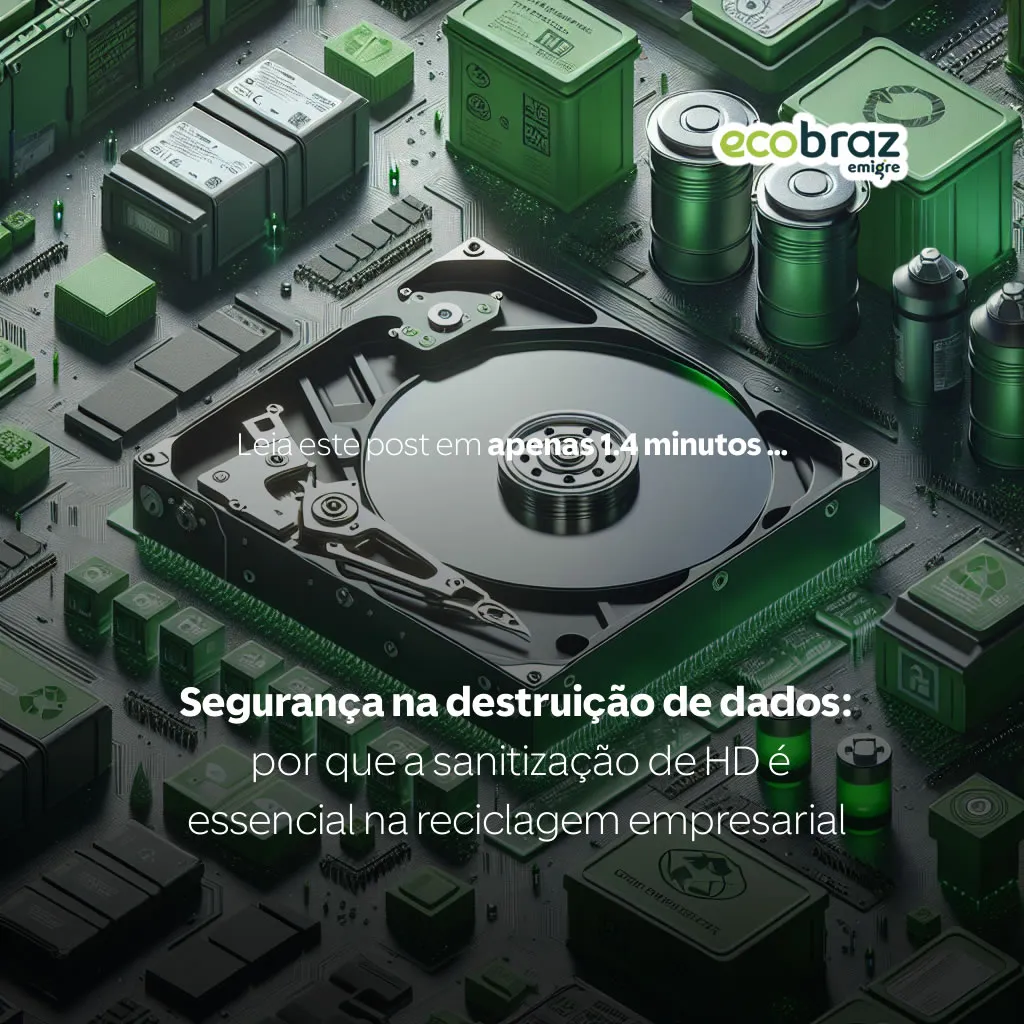
Data Destruction Security: Why Hard Drive Sanitization Is Essential in Business Recycling
Importance of Security in Data Destruction
The protection of sensitive information is crucial for compliance with current legislation and to prevent leaks that could compromise the integrity and image of organizations. The secure destruction of storage devices, especially hard drives (HDs), is a fundamental step in this process.
What is HD Sanitization?
HD sanitization refers to methods that ensure the complete removal of stored data, rendering it unrecoverable. The most commonly used techniques include overwriting, demagnetization, and physical destruction, according to guidelines from the National Institute of Standards and Technology (NIST), detailed in the publication nvlpubs.nist.gov/nistpubs/Legacy/SP/nistspecialpublication800-88r1.pdf.
Legislation and Regulations Governing Sanitization
The General Data Protection Law (LGPD - Law No. 13,709/2018, available at planalto.gov.br) requires the protection of personal data throughout the entire processing chain, including media disposal. Additionally, the National Solid Waste Policy (Law No. 12,305/2010) establishes guidelines for the environmentally proper management of waste, including that originating from electronic equipment.
Risks Associated with Lack of Sanitization
The absence of proper sanitization exposes confidential information to risks of theft and misuse. This can result in legal sanctions, reputational damage, and financial losses. Therefore, ensuring that HDs are properly sanitized before recycling is indispensable.
Procedures for Safe Disposal and Recycling
It is recommended to hire specialized services for collecting and managing electronic waste appointment scheduling, ensuring compliance with technical and environmental standards.
For secure disposal of HDs, use certified sanitization processes electronic scheduling that eliminate data through proven and controlled methods.
Conclusion
HD sanitization is an essential component for information security and sustainable management of electronic waste. Alignment with technical and legal standards protects data, minimizes risks, and supports environmental compliance.
ManifestTransparency & Security Manifesto
Evidence and transparency: Our ESG approach is built on traceable documentation, verifiable records and auditable operational criteria. We turn electronic waste management into operational evidence to support governance, traceability and the mitigation of environmental, documentary and corporate risks. Documentary security and compliance: Documented traceability helps reduce regulatory exposure, strengthens documentary defensibility and supports alignment with applicable environmental policies, corporate contracts and governance requirements, including national and international references relevant to supply chains. Operational costing of reverse logistics: Door-to-door collection and responsible processing of electronic waste involve relevant logistics, technical and documentary costs. For this reason, Ecobraz structures transparent operational costing models linked to reverse logistics execution, with no promise of financial return, investment or asset appreciation. Governance: Operational execution is guided by compliance, traceability and verifiable documentation criteria. The priority is to strengthen the client’s corporate evidence, reduce documentary gaps and support safer, more responsible and defensible disposal decisions.

Deixe um comentário
O seu endereço de e-mail não será publicado. Campos obrigatórios são marcados com *